


What Increases Your Total Loan Balance? (Complete Guide)
➞ When I first started learning about loans, I assumed something basic: if I borrow a certain amount and keep making payments, my loan balance should always go down. That assumption turns out to be one of the most common—and costly—misunderstandings people have about borrowing.
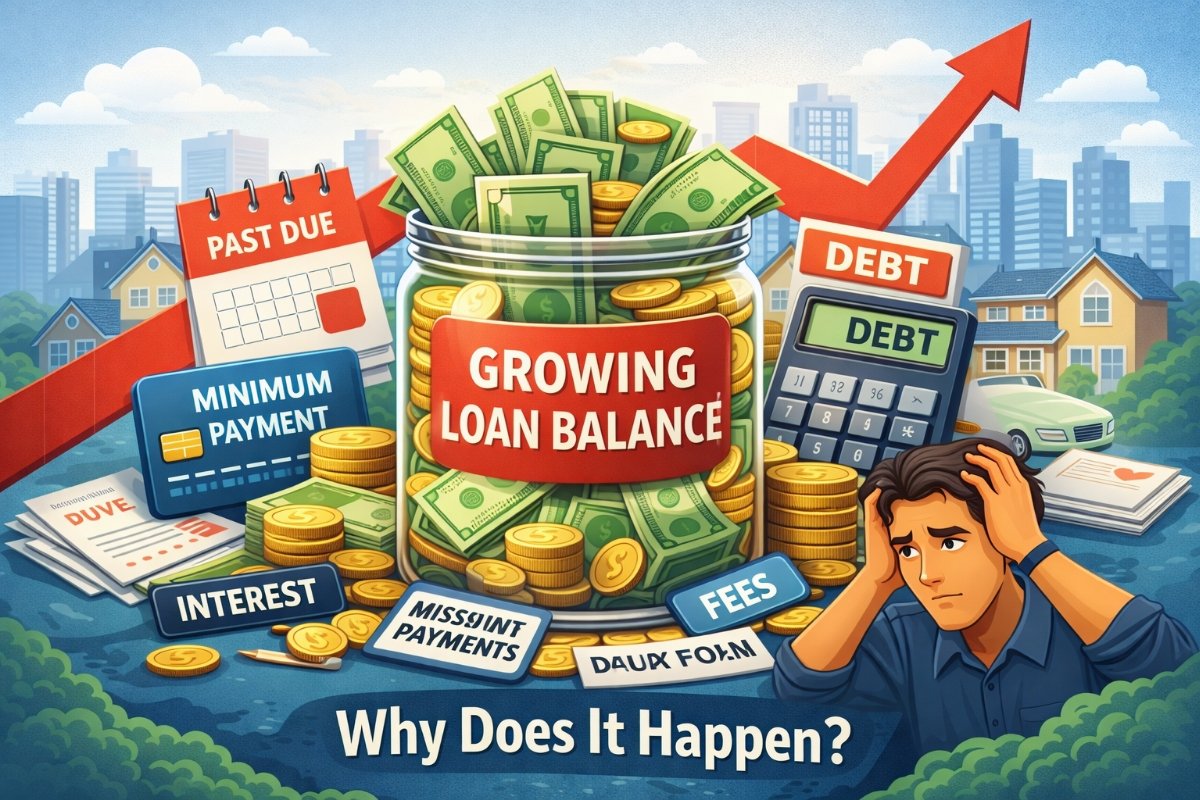
In reality, many borrowers are shocked to discover that their balance sometimes stays the same, drops very slowly, or even increases over time. So the real question isn’t just how loans work, but what increases your total loan balance even when you think you’re doing everything right.
In this article, I’ll break down exactly what increases your total loan balance, why it happens, and how you can stop it from quietly draining your finances. I’ll explain everything in plain language, using real-world logic rather than financial jargon.
1. What Does “Total Loan Balance” Actually Mean?
➞ Before understanding what increases your total loan balance, we need to be clear about what the term actually means.
Your total loan balance is not just the amount you originally borrowed. It usually includes:
- The remaining principal (the unpaid portion of your loan)
- Accrued interest that hasn’t been paid yet
- Capitalized interest (interest added to the principal)
- Certain fees or penalties added to the loan
This is why two people can borrow the same amount but end up owing very different totals over time. Your loan balance reflects how the loan behaves, not just how much money you received.
When people ask what increases your total loan balance, they’re often surprised to learn that borrowing more money is only one of many reasons.
2. Interest Accumulation: The Biggest Balance Booster
➞ If I had to name the single biggest factor behind what increases your total loan balance, it would be interest accumulation.
Interest is the cost of borrowing money, and it doesn’t stop just because you made a payment. Depending on your loan type, interest may accrue:
- Daily
- Monthly
- Or continuously on the remaining balance
The longer your loan exists, the more interest builds up. This is especially true for long-term loans like mortgages, student loans, and extended personal loans.
Even when you pay on time, a large portion of your payment may go toward interest rather than reducing the principal. That’s why balances often shrink painfully slowly at the beginning of a loan.
Simply put, interest accumulation is one of the most powerful answers to what increases your total loan balance.
3. Missed or Late Payments and Their Hidden Impact
➞ One missed payment might not feel like a big deal—but financially, it can be brutal.
Late or missed payments increase your total loan balance in several ways:
- Late fees get added
- Unpaid interest continues to accrue.
- Interest may capitalize and increase the principal
- Penalty interest rates may kick in
What makes this worse is the compounding effect. Once fees and interest are added to your balance, future interest is calculated on that higher amount.
From my experience, this is one of the fastest ways people accidentally inflate their debt. If you’re asking what increases your total loan balance quickly, missed payments are high on the list.

4. Minimum Payments: Why Paying Less Costs You More
➞ Minimum payments are designed to keep your account in good standing—not to help you pay off debt efficiently.
When you make only the minimum payment:
- Most of the payment goes toward interest.
- Very little reduces the principal
- The loan stays active longer.
- Total interest paid increases dramatically
This is especially dangerous with credit cards and revolving loans. I’ve seen people pay faithfully for years, only to realize their balance barely moved.
Minimum payments may feel safe, but they are a major reason why your total loan balance increases over time without you realizing it.
5. Loan Fees That Quietly Increase Your Balance
➞ Fees are often overlooked, yet they play a sneaky role in increasing debt.
Some common fees that may increase your total loan balance include:
- Origination fees rolled into the loan
- Late payment penalties
- Loan servicing charges
- Credit insurance premiums
- Administrative or documentation fees
When these fees are added to your loan instead of paid upfront, they become part of the balance—and yes, interest is often charged on them.
This is a subtle but important answer to what increases your total loan balance, especially for personal and auto loans.
6. Interest Capitalization: The Silent Balance Inflator
➞ Interest capitalization is one of the least understood—yet most damaging—factors affecting loan balances.
Capitalization happens when unpaid interest is added to your principal. Once that happens:
- You’re charged interest on interest.
- Your balance jumps suddenly
- Future payments become less effective
This often occurs during:
- Loan deferment or forbearance
- Grace periods
- Certain refinancing events
- Missed payment cycles
In my opinion, interest capitalization is one of the most dangerous answers to what increases your total loan balance, because borrowers often don’t realize it happened until the damage is done.
7. Loan Refinancing and Restructuring: Help or Harm?
➞ Refinancing can be helpful—but it can also increase your total loan balance if done incorrectly.
Refinancing may raise your balance due to:
- New fees added to the loan
- Extended loan term
- Reset interest schedules
- Capitalized unpaid interest
While your monthly payment may drop, the total amount owed over time can increase significantly.
So no, refinancing doesn’t always reduce debt. In fact, it’s a surprisingly common answer to what increases your total loan balance when borrowers focus only on short-term relief.
8. Negative Amortization: When Payments Don’t Cover Interest
➞ Negative amortization occurs when your payment is less than the interest accruing on the loan.
When this happens:
- Unpaid interest is added to the balance.
- The loan grows even while you’re paying.
- Debt increases month after month
This structure exists in certain mortgages, student loans, and income-based repayment plans.
It’s one of the clearest examples of what increases your total loan balance even when you make payments, and it’s something every borrower should understand before signing a loan agreement.
9. Lifestyle and Borrower Behavior That Increases Loan Balance
➞ Not all reasons behind rising loan balances are technical. Some are behavioral.
Common habits that increase your total loan balance include:
- Regularly deferring payments
- Using credit to pay other debt
- Ignoring loan statements
- Taking payment holidays without understanding the cost
- Relying on refinancing repeatedly
In my experience, the biggest financial damage often comes from small decisions made repeatedly. Lifestyle choices play a real role in what increases your total loan balance over the long term.
10. How to Stop Your Loan Balance from Growing
➞ The good news? Once you understand what increases your total loan balance, you can actively stop it.
Here’s what I personally recommend:
- Pay more than the minimum whenever possible
- Avoid missed payments at all costs.
- Shorten loan terms instead of extending them
- Review statements monthly
- Understand how interest is calculated
- Be cautious with deferment and refinancing.
Stopping balance growth isn’t about earning more—it’s about understanding the system and using it wisely.
Final Thoughts
➞ Understanding what increases your total loan balance is one of the most important financial lessons I’ve learned—and one I wish more people were taught earlier.
Loan balances don’t grow by accident. They grow because of interest mechanics, fees, payment structures, and human behavior. Once you understand these forces, you stop being surprised by debt—and start controlling it.
If there’s one takeaway from this guide, it’s this: loans reward awareness and punish ignorance. The more you understand what increases your total loan balance, the more power you have to reduce it.
FAQs About What Increases Your Total Loan Balance
Can my loan balance increase even if I pay on time?
➞ Yes. If your payment doesn’t fully cover interest, or if interest is capitalized, your balance can still grow even with on-time payments.
Does refinancing always reduce total loan cost?
➞ No. Refinancing can increase your total loan balance if fees, extended terms, or capitalized interest are involved.
How much difference does one missed payment make?
➞ One missed payment can add fees, trigger capitalization, and increase future interest—sometimes costing hundreds or thousands over time.
Is interest charged on fees?
➞ Often, yes. If fees are added to your loan balance, interest may be charged on them.
Can deferment or forbearance increase my total loan balance?
➞ Absolutely. Interest usually continues accruing and may be capitalized later.
Why does my balance drop so slowly at the beginning?
➞ Early payments mostly cover interest, not principal—a major reason why your total loan balance increases long-term.
Do longer loan terms always increase total debt?
➞ In most cases, yes. Longer terms mean more interest paid over time.